Financial models
P&L, Balance sheet, Cash flow
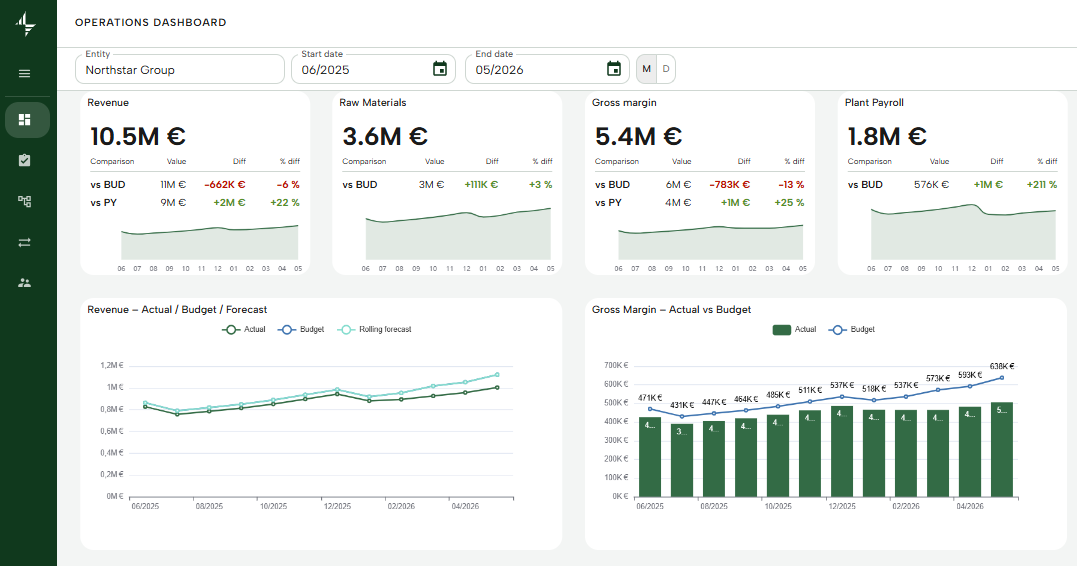
Capilyst brings financial models, business inputs, and reporting views into one workflow, so finance teams can run each cycle with less manual work.
Capilyst brings the key parts of a finance cycle into one structure: existing financial data, forecast assumptions, business inputs, responsible users, and reporting views.
Inputs
Integrations
File imports
Business inputs
Outputs
Financial models
P&L, Balance sheet, Cash flow
Management reports
Monthly reports, Executive summaries
AI Analysis
Variance drivers, insights
Outcome
Customer Case: Heavy cash flow and P&L forecasting process
Saved monthly
Time saved in the recurring finance processes.
The process relied on dozens of Excel files, monthly meetings, sales forecast collection, constant reminders, and manual consolidation of calculations.
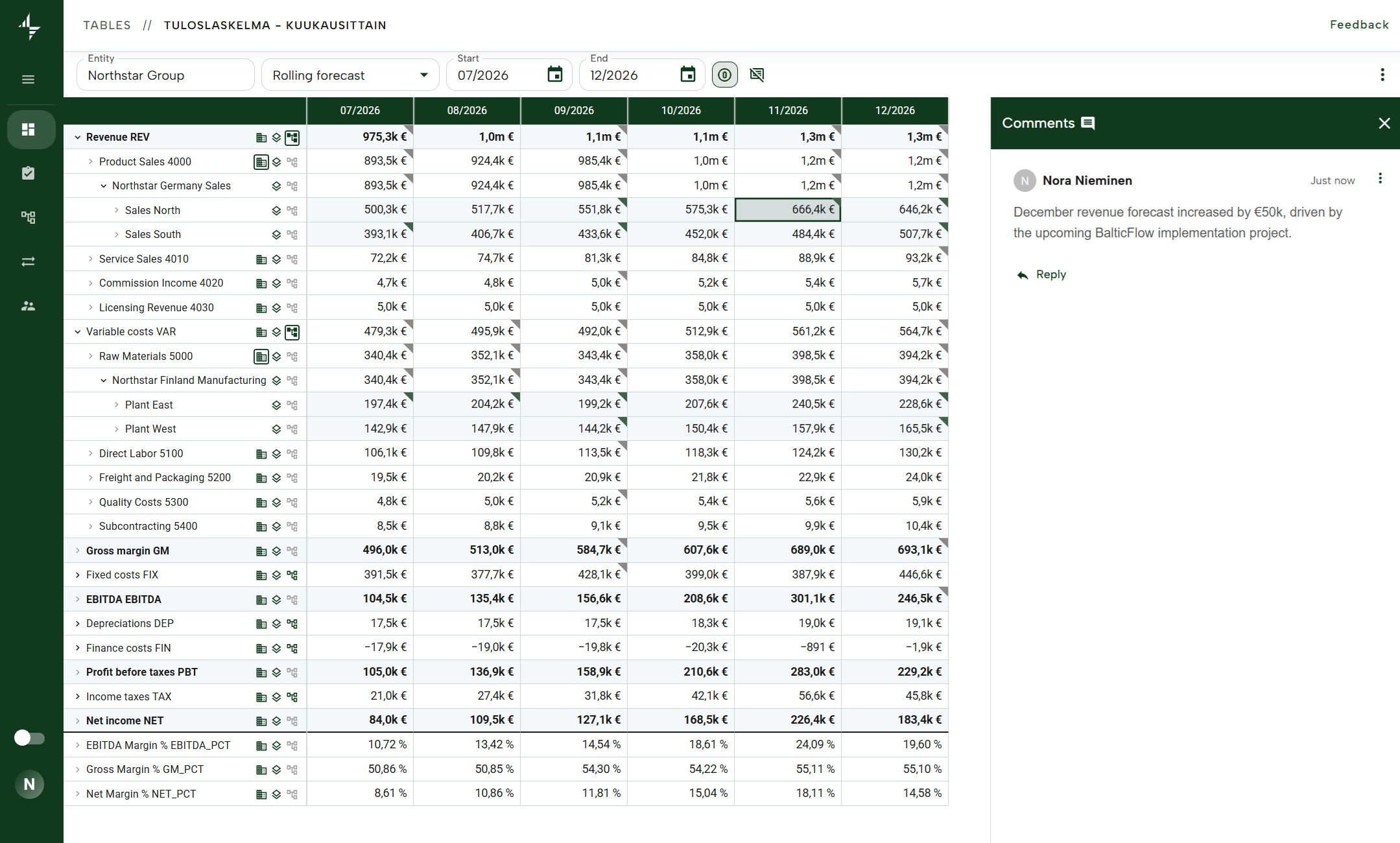
Capilyst brought the customer's financial model into one shared structure. New inputs update the P&L and cash flow forecast immediately, while focused input requests keep responsibilities and progress visible.
25h/month saved. Less manual work and fewer meetings, with a clearer forecast model and a faster view of how changes affect profit, cash flow, and reporting.
Start with a 30-minute discussion around one concrete process and see where Capilyst can remove manual work first.
We start with one real finance process where the value is visible quickly: a forecast round, cash flow forecast, budget update, or reporting workflow. We map your current files, data sources, responsibilities, and outputs into a first Capilyst workflow, then run that process in a controlled scope before expanding.
A focused first implementation can be live in hours to a week, depending on scope, data quality, and how much of the model needs to be configured. The goal is not a heavy system project, but a practical first workflow that proves value fast.
Capilyst works with your current finance processes and the fastest starting point is usually file import, structured exports, or agreed data extracts from accounting, ERP, CRM, or reporting systems. Direct integrations are handled case by case, with common accounting and ERP systems prioritised as the product expands.
No. Your ERP or accounting system remains the source for actuals. Capilyst sits on top as the planning, forecasting, workflow, explanation, and reporting layer — the place where numbers, owners, comments, and decisions come together.
Usually very little. If the first workflow uses files or structured exports, finance team can handle most of the implementation. Technical support may only be needed when direct integrations, API access, permissions, or source-system extracts are required.
Yes. Capilyst is built so that business users do not need to understand the full financial model. The interface guides each user directly to the numbers, comments, and tasks that belong to their area of responsibility in a clear view. The goal is to make participation easy even for people who do not work with finance systems every day. When needed, finance can also send targeted requests for the specific numbers, assumptions, or comments that each person is responsible for. Finance keeps control of the model, structure, and reporting.
Usually enough to run one real process: your current P&L structure, actuals, budget or forecast files, unit or cost center structure, and the people responsible for inputs. From there, Capilyst creates a shared workflow where collection, consolidation, explanations, and reporting happen in one place.